Back to Glossary
🦋
HPA axis
High-YieldFree study guide for medical students and educators
~2 min readLast reviewed 2026-02-23
Also known as:HPA
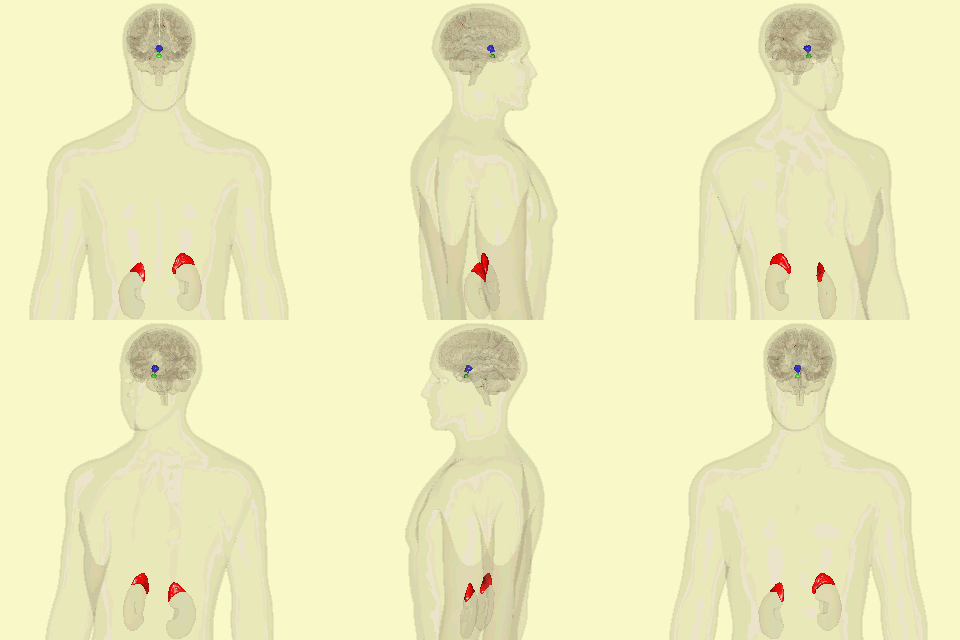
Neuroendocrine circuit for stress: CRH (hypothalamus) → ACTH (anterior pituitary) → cortisol (adrenal cortex) with negative feedback on both hypothalamus and pituitary.
- Explains patterns in cortisol testing, responses to stress, and the physiology behind Cushing syndromes and adrenal insufficiency.
- Dexamethasone suppression testing workflows
- Early‑morning (8am) cortisol vs late‑night salivary cortisol
- Interpretation of ACTH values (high vs low) to localize pathology
- Think in feedback loops: what is producing cortisol and who is driving it?
- High cortisol + low ACTH → adrenal source or exogenous glucocorticoids
- High cortisol + high ACTH → pituitary (Cushing disease) vs ectopic; use high‑dose dex or IPSS
| Condition | Distinguishing Feature |
|---|---|
| Cushing disease | pituitary ACTH excess |
| Ectopic ACTH | paraneoplastic; no dex suppression |
| Primary adrenal insufficiency | low cortisol; ACTH elevated |
- HPA axis itself isn’t a disease—treat the underlying disorder (Cushing, Addison, exogenous steroids)
- Stress‑dose steroids when physiologically suppressed axes are stressed (eg, surgery, sepsis)
- Random afternoon cortisol is rarely useful—use standardized morning/late‑night tests
- Chronic exogenous steroids suppress CRH/ACTH → adrenal atrophy → crisis risk
- Adrenal crisis: hypotension, hyponatremia, vomiting—give IV hydrocortisone immediately
- Suspected hypercortisolism → screening test (overnight dex OR late‑night salivary OR 24‑hr urine)
- If positive → ACTH level
- High ACTH → pituitary vs ectopic (high‑dose dex ± IPSS); Low ACTH → adrenal imaging
- Suspected adrenal insufficiency → 8am cortisol ± ACTH stimulation
Case 1
A 45‑year‑old with central obesity and violaceous striae.
Case 2
A 67‑year‑old with chronic prednisone abruptly stopped before elective surgery.
HPA axis animation
image credit⚡At a Glance
High-YieldSpecialtyEndocrinology
Key findingsDexamethasone suppression testing workflows; Early‑morning (8am) cortisol vs late‑night salivary cortisol
TreatmentHPA axis itself isn’t a disease—treat the underlying disorder (Cushing,...
MnemonicRandom afternoon cortisol is rarely useful—use standardized morning/late‑night...